Is It Legal to Build a Home Addition in Camden County Without a Permit?

Table of Contents
- Introduction
- Do You Need a Permit to Build a Home Addition in Camden County?
- Why Permits Exist for Home Additions
- What Typically Requires a Permit
- What Rarely Requires a Permit
- How Camden County's Mix of Cities and Unincorporated Areas Affects the Rules
- What Happens If You Build an Addition Without a Required Permit
- A Decision Framework for Planning an Addition
- Common Misunderstandings About Home Addition Permits
- A Realistic Scenario
- What Typical Online Advice Overlooks
- Conclusion
Key Takeaways
- Whether a home addition in Camden County needs a permit depends on the scope of the project and the specific city or unincorporated area where the home sits, not a single countywide rule.
- Additions that add square footage, change the structure, or add plumbing and electrical work almost always require a building permit.
- Camden County includes several incorporated cities with their own codes, plus unincorporated areas where requirements can differ significantly.
- Building without a required permit can lead to fines, forced changes to finished work, and complications at resale or with insurance.
- Confirming requirements with the local building authority before design work is finalized is the most reliable way to avoid costly surprises.
Introduction
Is it legal to build a home addition in Camden County without a permit? In most cases, no. Adding square footage to a home, whether a new room, an expanded garage, or a second story, almost always requires a building permit because it changes the structure, the plumbing or electrical systems, or the home's footprint. The exact requirement depends on where in Camden County the home sits, since permitting authority is split between individual cities and the county itself. Before finalizing plans for any home addition project, it helps to understand how that split works.
This matters for homeowners and business owners planning a project in this part of Missouri. Camden County includes incorporated cities such as Camdenton, Osage Beach, and Lake Ozark, each with its own building department and code, as well as unincorporated areas governed directly by the county. A project that clearly needs a permit inside city limits may fall under different rules just outside them.
The practical question is not simply "do additions need permits." It is "which authority governs my address, and what does that authority require for this scope of work." Answering that correctly before construction starts keeps a home addition both legal and free of expensive rework later.
Do You Need a Permit to Build a Home Addition in Camden County?
Direct answer: Yes, in nearly all cases. A home addition increases a structure's footprint or changes its systems, which is exactly the kind of work that building codes are designed to review, so a permit is almost always required regardless of which part of Camden County the home is in.
Why the answer is rarely "no"
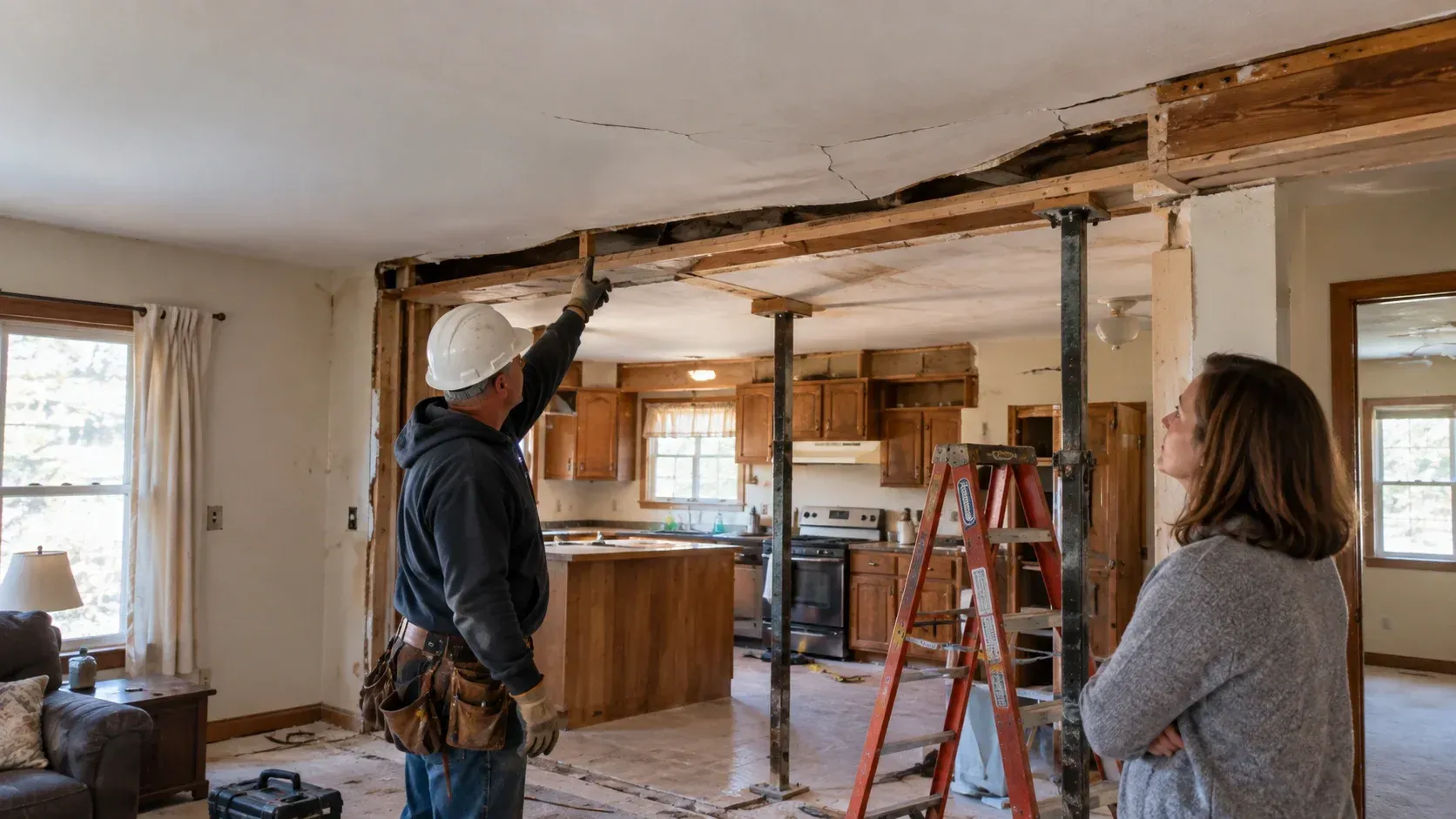
A true home addition differs from a cosmetic remodel. It typically involves new foundation work, new framing, and new roof or wall connections, along with plumbing or electrical extensions if the addition includes a bathroom, kitchen space, or additional outlets. Each of these triggers permit review almost everywhere in Missouri.
Where the answer can vary
What does vary is the process: which office you contact, how detailed the plans must be, and how long approval takes. Those details depend on whether the home sits inside a city like Camdenton or Osage Beach or in an unincorporated part of the county, covered next.
Why Permits Exist for Home Additions
Direct answer: Permits exist so that a local building authority can review and inspect structural, electrical, and plumbing work before it is hidden behind finished surfaces, reducing the risk of hazards that are difficult or expensive to correct later.
The logic behind the requirement
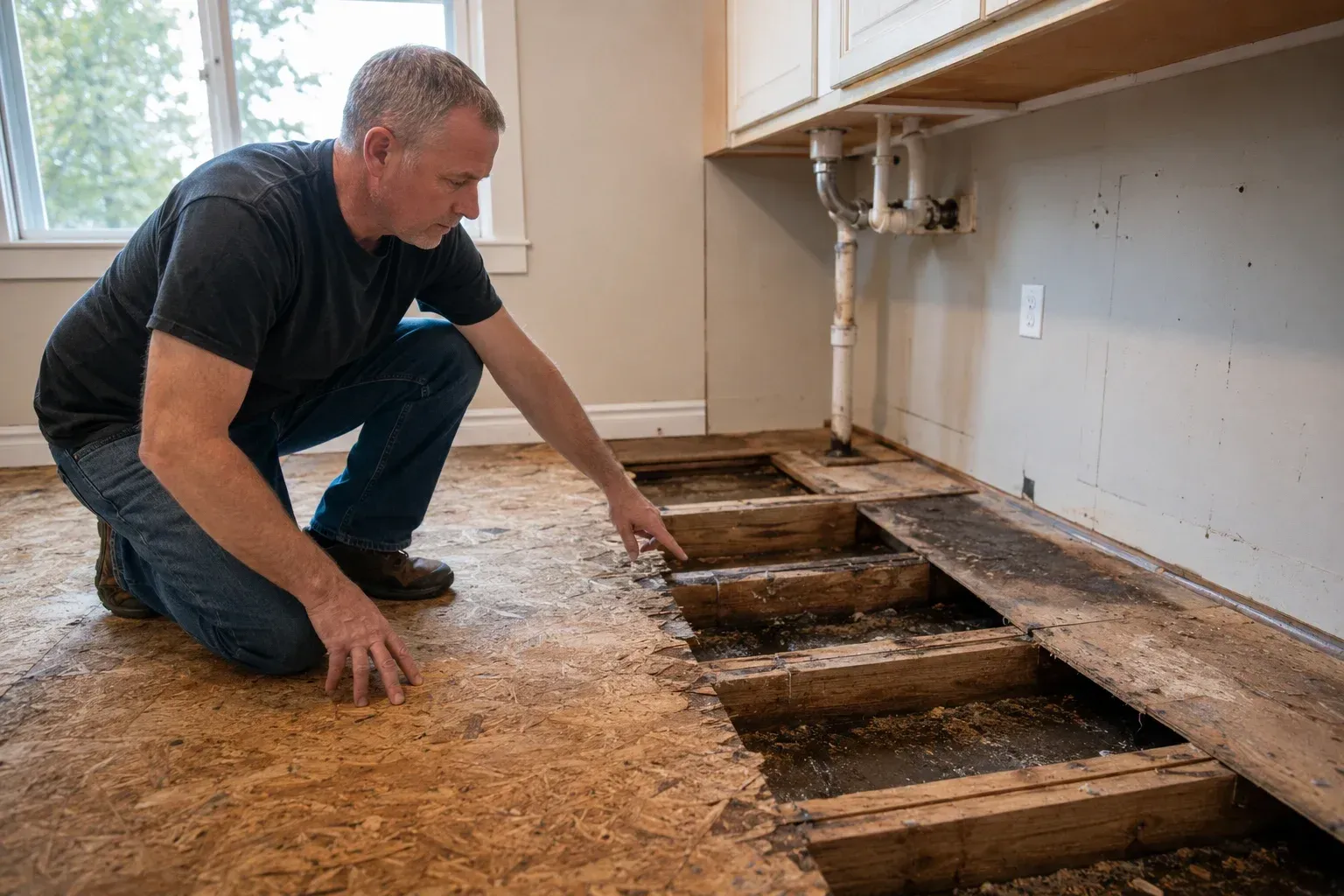
An addition changes how a house carries weight, how water drains, and how electricity is distributed. A new foundation that is undersized or wiring that is not up to code can create problems that are invisible once drywall goes up. Permitting and inspection exist to catch these issues while they can still be corrected.
Why this matters beyond the project itself
An addition built without review carries risk beyond the build itself. If the home is sold or insured later, the work's history matters, and permits create a record that protects future owners and insurers alike.
What Typically Requires a Permit
Direct answer: Projects that increase a home's square footage, alter its foundation or structural framing, or add new plumbing or electrical circuits typically require a building permit, along with separate plumbing and electrical permits where applicable.
Common addition scopes that need permits
- New rooms or expanded floor area. Any addition that extends the home's footprint changes the structure and foundation.
- Second-story additions. Adding a floor above an existing structure involves significant structural review.
- Attached garages and sunrooms. Even simpler additions usually require a foundation and framing permit.
- Additions with new plumbing. A bathroom or kitchenette added to a new space requires plumbing permits in addition to building permits.
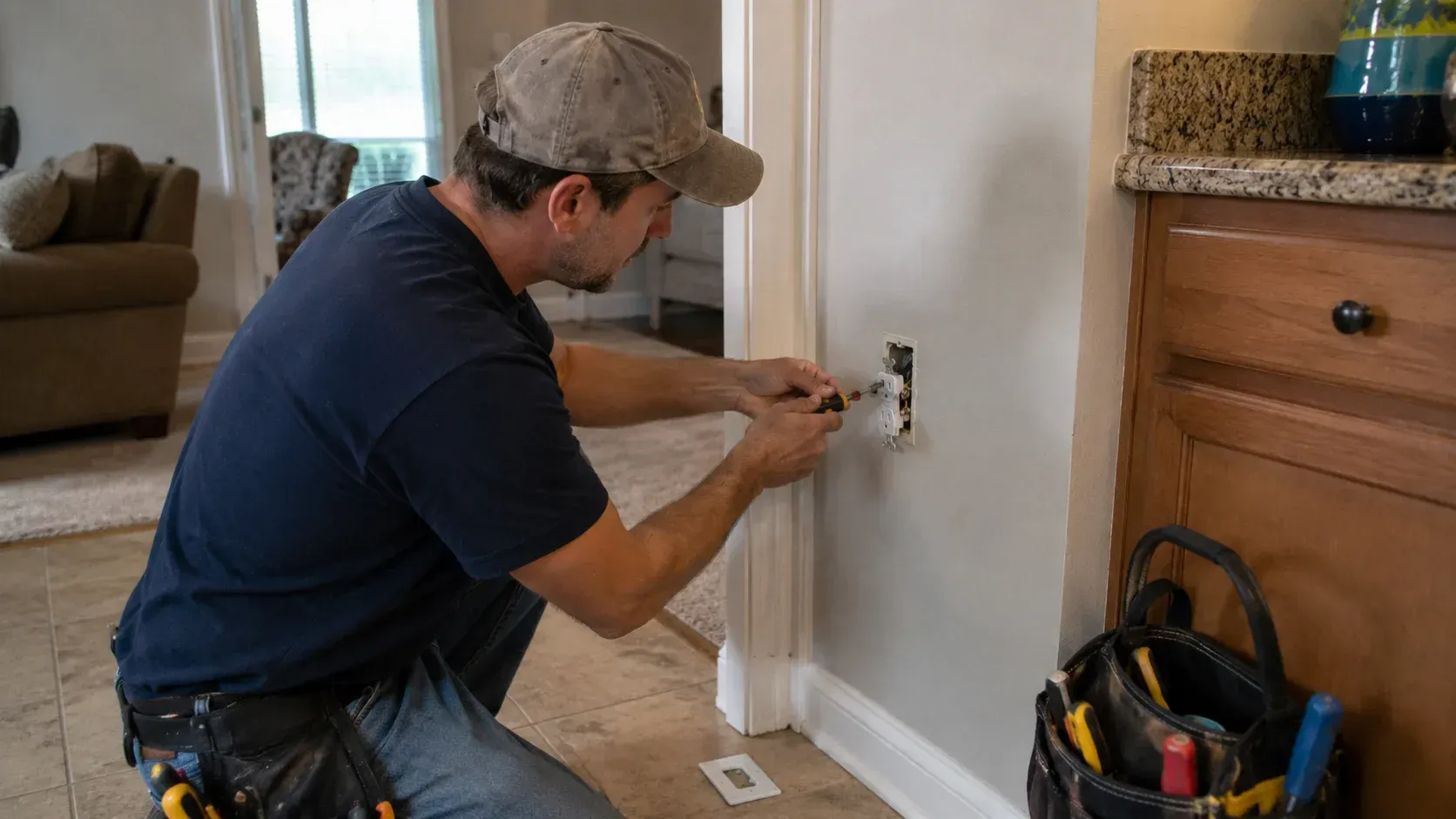
- Additions with new electrical circuits. New wiring, panels, or significant outlet additions require electrical permits.
The pattern is straightforward: if a project changes the structure, footprint, or a regulated system, it falls under permit review. This category is best handled with professional framing and construction rather than informal labor, since the review process assumes qualified work.
What Rarely Requires a Permit
Direct answer: Minor cosmetic work that does not expand the footprint or change structural, plumbing, or electrical systems, such as painting or replacing finishes inside the existing structure, usually does not require a permit.
Examples and where the line gets blurry
Interior painting, replacing flooring within an existing room, and swapping fixtures in their current locations generally fall outside permit requirements, since they do not touch structure or regulated systems. A "simple addition" can still drift into permit territory quickly, though. Enclosing an existing porch, for example, often adds conditioned floor space and touches the roofline, which usually brings it back under review. When a project changes square footage or systems in any way, assume a permit applies until a local office confirms otherwise.
How Camden County's Mix of Cities and Unincorporated Areas Affects the Rules
Direct answer: Camden County contains several incorporated cities, each with its own building department and adopted code, along with unincorporated areas where the county itself typically handles permitting, so the correct office to contact depends entirely on the home's specific location.
Incorporated cities set their own requirements
Cities such as Camdenton, Osage Beach, and Lake Ozark maintain their own building departments. Each can adopt its own version of a building code, set its own fee schedule, and run its own inspection process. A homeowner inside one of these cities works directly with that city's office.
Unincorporated areas follow county rules
Outside city limits, Camden County's own planning or building office typically governs permitting, and requirements can differ from what a nearby city requires. This should never be assumed without confirmation.
Why this split matters for a home addition
Because Camden County is a patchwork of these jurisdictions, two homes a short drive apart can face different permit processes for a similar addition. Homeowners and business owners working with properties around Lake Ozark and the surrounding area should identify the correct office before relying on general advice written for Missouri as a whole.
What Happens If You Build an Addition Without a Required Permit
Direct answer: Building an addition without a required permit can result in fines, a stop-work order, mandatory exposure or correction of completed work for inspection, difficulty at resale, and potential complications with insurance coverage if a loss is connected to unpermitted work.
The risk is often delayed, not immediate
Many of these consequences do not appear right away. An addition can be built and used for years before a problem surfaces, often at the worst possible time.
At resale and with insurance
Buyers, agents, and inspectors frequently ask whether additions were permitted, and an unpermitted addition can slow a sale or require retroactive permitting that means opening finished walls. If damage later traces back to unpermitted work, an insurer may also question coverage, depending on policy language.
With the local authority
If a jurisdiction discovers unpermitted work, it can require retroactive permitting, charge fines, and in some cases require portions of the work to be exposed or redone. This is almost always more expensive than obtaining the permit before construction.
A Decision Framework for Planning an Addition
Use this sequence when evaluating a home addition project in Camden County.

| Step | What to Determine | Why It Matters |
|---|---|---|
| 1. Scope | Does the project add square footage or change structure, plumbing, or electrical systems? | Determines whether a permit is likely required |
| 2. Jurisdiction | Is the home inside a city like Camdenton or Osage Beach, or in an unincorporated area? | Identifies the correct office to contact |
| 3. Contact | Call the relevant building department and describe the project | Confirms the specific requirements for your address |
| 4. Plans | Determine what drawings or engineering the office requires | Sets expectations for design and cost |
| 5. Responsibility | Clarify in writing whether you or your contractor will pull the permit | Avoids disputes mid-project |
| 6. Records | Keep all permits and inspection approvals | Protects you at resale and with insurance |
Working through these steps before finalizing a design keeps the project grounded in the actual rules that apply to your address, rather than a general assumption about Missouri or Camden County as a whole.
Common Misunderstandings About Home Addition Permits
"A small addition does not need a permit." What is actually true: requirements are based on the type of change, not the size. A modest addition that changes the foundation or roofline still typically requires review. Why it matters: assuming small means exempt is the most common permitting mistake.
"If my contractor says it is fine, I do not need to check." What is actually true: homeowners can remain responsible for permits even when a contractor manages the project. Why it matters: clarifying responsibility in writing protects both parties if a permit is missed.
"Rural parts of the county have no rules at all." What is actually true: unincorporated areas are typically still governed by county requirements, even if the process differs from a city. Why it matters: assuming no oversight can lead to work that needs correction later.
"Once the addition is built, the permit question is settled." What is actually true: unpermitted work can resurface years later, particularly at resale or after an insurance claim. Why it matters: the risk does not expire just because time has passed.
A Realistic Scenario
Consider a hypothetical homeowner near Lake Ozark planning a family room addition with a half bathroom. Assuming the project is modest enough to skip formal review, the homeowner starts with just a contractor agreement.
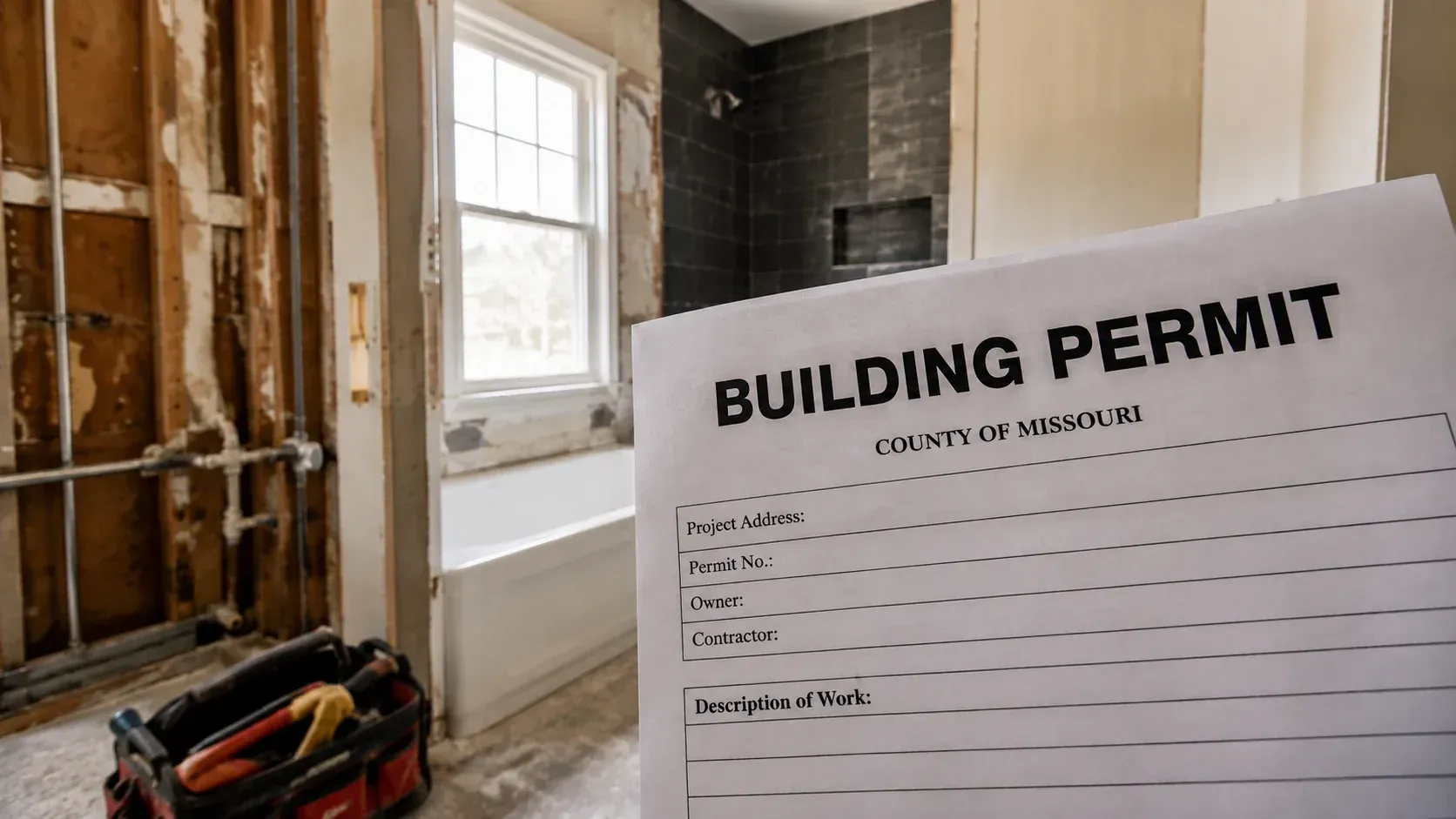
A call to the local building department reveals the project needs a building permit for the new foundation and framing, a plumbing permit for the half bathroom, and an electrical permit for new circuits. Because the home sits inside city limits, the city's building department handles the review, not the county.
Confirming this before finalizing the contractor agreement lets the permit applications proceed alongside design, rather than after construction starts. The scenario shows a common pattern: a project's legal requirements are tied to specifics only the governing office can confirm, not to a general sense of how large or small the work seems.
What Typical Online Advice Overlooks
General articles about building permits often say "additions typically require a permit" and move on. That is accurate but incomplete for a county like this one, and it misses several practical points.
Jurisdictional overlap is the real complexity
Advice written for a national audience rarely addresses counties made up of multiple incorporated cities plus unincorporated territory. In Camden County, identifying the correct office is often the harder half of the process.
Responsibility and cost comparisons are rarely spelled out
Generic guides rarely clarify who is accountable if a permit is missed, even though homeowners can remain responsible even when a contractor was expected to handle it. They also frame a permit as simply an extra fee without comparing it to the far higher cost of retroactive permitting, which can include opening finished walls and paying fines.
Business use adds another layer
For business owners considering an addition to a commercially used property, zoning and occupancy requirements can apply on top of standard building permits, a layer almost never addressed in homeowner-focused guides.
Timing affects everything
The most useful point to confirm requirements is after a design is roughed out but before a contract is signed, when the scope is known but no irreversible decisions have been made.
Conclusion
Building a home addition in Camden County without a permit is not legal in nearly any scenario where the project adds square footage or changes structural, plumbing, or electrical systems. What changes from property to property is the process, since the county includes several incorporated cities with their own building departments as well as unincorporated areas governed by the county itself. Confirming which authority governs a specific address, and what that authority requires for the planned scope, is the step that determines how smoothly a project moves forward.
The cost of a permit is predictable and modest compared to the risk of building without one, which can include fines, forced corrections, and complications at resale or with insurance. Treating permitting as part of early planning, rather than a formality to handle later, is what allows a home addition to move from design to completion without a legal or financial setback along the way.
Planning a Home Addition in Camden County? Confirm Your Permit Requirements First
If you are considering a home addition in Camden County and want help understanding how permitting typically applies to your project, a conversation before you finalize plans can save time and avoid surprises later. All In One Home & Condo Care works on additions and remodeling projects across Camden, Miller, and Morgan Counties and can walk you through what your scope of work generally involves, with no pressure and no obligation.
Get in touch with our team or call (573) 216-0020 with your questions, and always confirm final requirements with your local building authority.
Frequently Asked Questions
Do I need a permit to build a home addition in Camden County?
In nearly all cases, yes. Additions that add square footage or change structural, plumbing, or electrical systems typically require a building permit. The exact process depends on whether the home is in an incorporated city or an unincorporated area.
Who handles building permits in Camden County?
It depends on location. Incorporated cities such as Camdenton, Osage Beach, and Lake Ozark have their own building departments, while unincorporated areas are typically governed by the county's planning or building office.
What home addition work usually does not need a permit?
Cosmetic work like interior painting or replacing finishes in their existing location usually does not require a permit. Once a project adds square footage or touches structural, plumbing, or electrical systems, a permit typically applies.
What happens if I build an addition without a required permit?
Possible consequences include fines, a stop-work order, required exposure or correction of completed work, complications selling the home, and potential issues with insurance coverage if a loss relates to the unpermitted work.
Does my contractor handle the permit for a home addition?
It depends on the agreement. Homeowners can remain responsible for permits even when a contractor manages the project, so it is important to clarify in writing who will apply for and track the permit before work begins.