How Long Does a Composite Deck Last in Lake Ozark, Missouri's Climate?
Why Choosing the Right Roofing Contractor Matters

Table of Contents
- Introduction
- The Short Answer: 25 to 30 Years, Sometimes More
- What Composite Decking Is Made Of
- How Lake Ozark's Climate Affects Composite Decking Lifespan
- The Part Most People Forget: The Frame Underneath
- Composite Deck Maintenance That Actually Matters
- Signs Your Composite Deck Is Wearing Out
- Composite vs. Wood: A Quick Lifespan Comparison
- Conclusion
- Thinking About a Deck That Can Handle Lake Weather?
- Frequently Asked Questions
Key Takeaways
- Most composite decks last between 25 and 30 years, and many boards carry manufacturer warranties of 25 to 50 years.
- Lake Ozark's humid summers, freeze-thaw winters, and strong sun all affect how a composite deck ages over time.
- Composite boards resist rot and insects, but the framing underneath is usually wood and needs attention too.
- Basic composite deck maintenance, like seasonal cleaning and keeping gaps clear, helps the surface last longer.
- Fading, soft spots, loose fasteners, and shifting boards are the main warning signs to watch for as a deck ages.
Introduction
A composite deck in Lake Ozark, Missouri typically lasts 25 to 30 years, and many products are backed by manufacturer warranties of 25 to 50 years. The exact number depends on the quality of the boards, how the deck was built, how much sun and moisture it takes on, and how well it gets cleaned and inspected over the years.
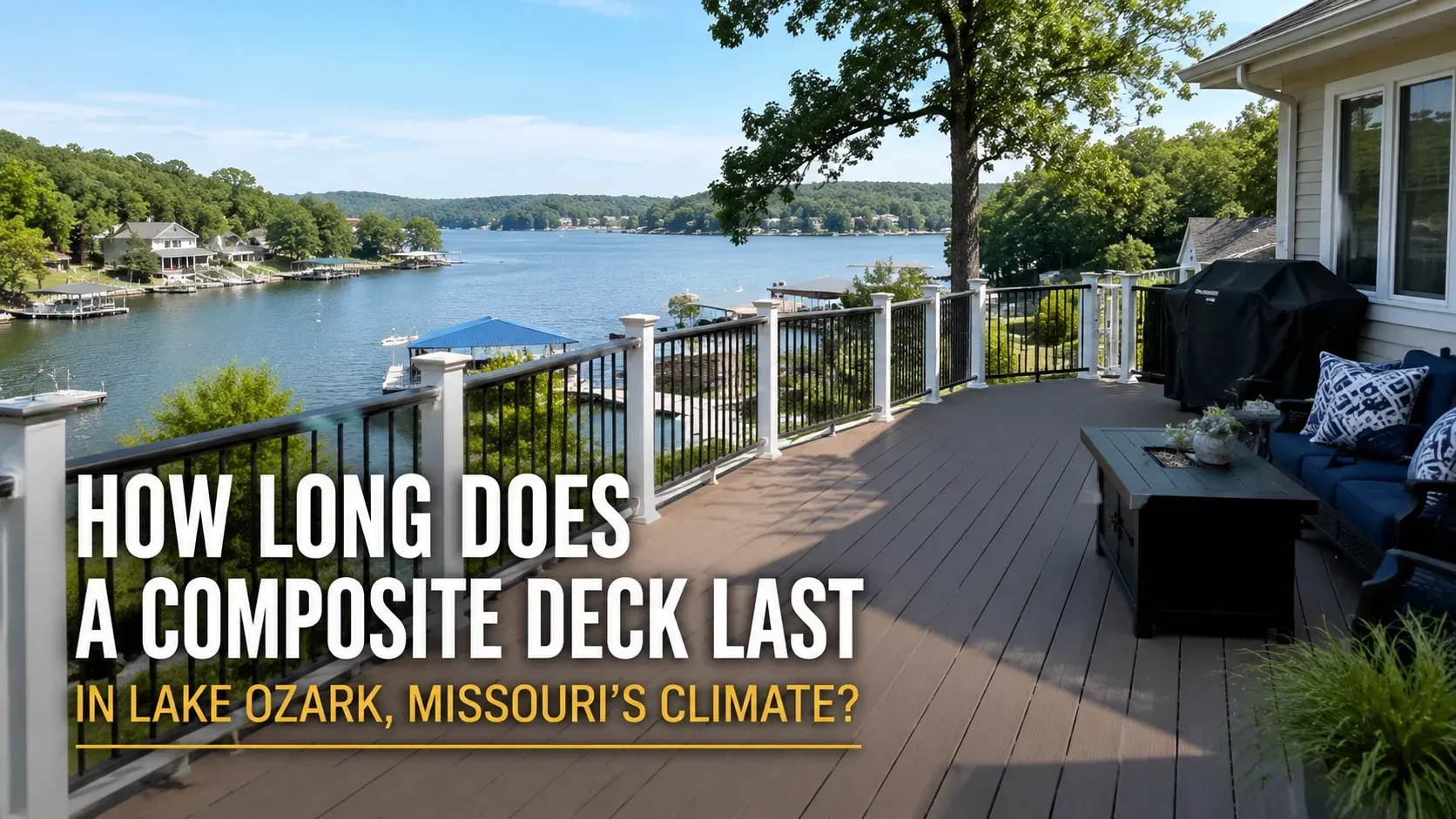
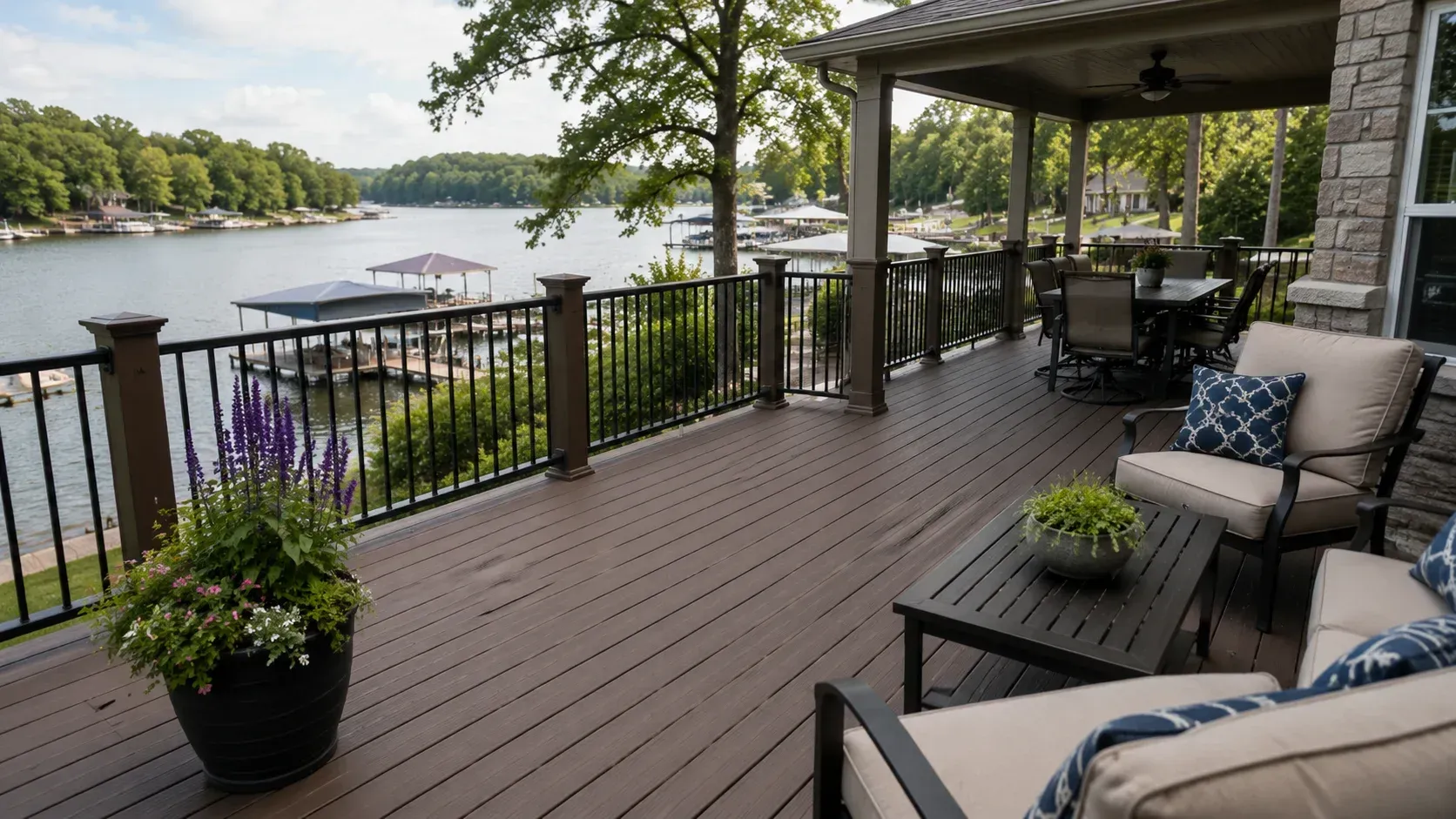
That range matters here more than in most places. Lake of the Ozarks homes deal with humid summers, hard winter freezes, and a lot of direct sun bouncing off the water. Decks near the shoreline work harder than decks in a shaded suburban backyard, so it pays to understand what shortens their life and what protects it.
This guide walks through how composite decking holds up in mid-Missouri weather, what routine care looks like, and how to spot wear before it turns into a bigger repair. It draws on what we see building and repairing custom decks around Camden, Miller, and Morgan Counties year after year.
The Short Answer: 25 to 30 Years, Sometimes More
Composite decking is designed to outlast pressure-treated wood by a wide margin. A well-built composite deck usually reaches 25 to 30 years of useful life. Premium capped boards, installed correctly and cleaned regularly, can go longer than that.
Warranties tell part of the story. Many manufacturers cover their boards against rot, splintering, and insect damage for 25 years, and some capped products carry 50-year fade and stain coverage. A warranty is not a lifespan promise, but it does show how long the maker expects the material to perform under normal conditions.
The other part of the story is everything around the boards: the framing, the fasteners, the flashing at the house, and the drainage. Those pieces often decide when a deck actually needs to be replaced.
What Composite Decking Is Made Of
Composite boards are a blend of wood fibers and plastic, pressed together under heat. That mix is why they resist the problems that end most wood decks early: rot, insect damage, and splitting.
Most modern boards are "capped," meaning they have a plastic shell bonded around the core. The cap blocks moisture and UV light, which is what keeps the color stable and the surface from breaking down. Older uncapped composites from the early 2000s lacked that shell, which is why some people still associate composite with mold and heavy fading.
Board quality varies a lot between product lines. Entry-level boards may only be capped on three sides, while higher-end boards are fully wrapped. That difference shows up 15 or 20 years down the road, especially on a lake deck that stays damp.
How Lake Ozark's Climate Affects Composite Decking Lifespan
Mid-Missouri weather is tough on outdoor structures. Here is how each part of the local climate plays into how long a composite deck lasts.
Humidity and Lake Moisture
Summers around the lake are humid, and shoreline decks pick up extra moisture from spray and morning condensation. Composite boards themselves shrug this off, but trapped moisture feeds mildew on the surface and, more importantly, keeps the wood framing underneath damp. Good airflow under the deck makes a real difference.
Freeze-Thaw Cycles
Winters here swing above and below freezing over and over. Water that works into small gaps expands when it freezes. On a composite deck, the boards handle this well, but fasteners can loosen and footings can shift slightly over many seasons. That movement is why older decks develop squeaks and uneven boards.
Sun and UV Exposure
Lake decks often face open water with no tree cover, so they get full sun plus reflection off the surface. UV light is what fades decking. Capped composites fade slowly and evenly, usually settling into a slightly lighter version of their original color within the first year or two. Uncapped or budget boards fade faster and less evenly.
Heat
Dark composite boards get hot in July. Heat does not shorten the board's life in a major way, but repeated expansion and contraction is one more source of slow movement in the structure. Proper gapping during installation gives the boards room to move without stressing the fasteners.

The Part Most People Forget: The Frame Underneath
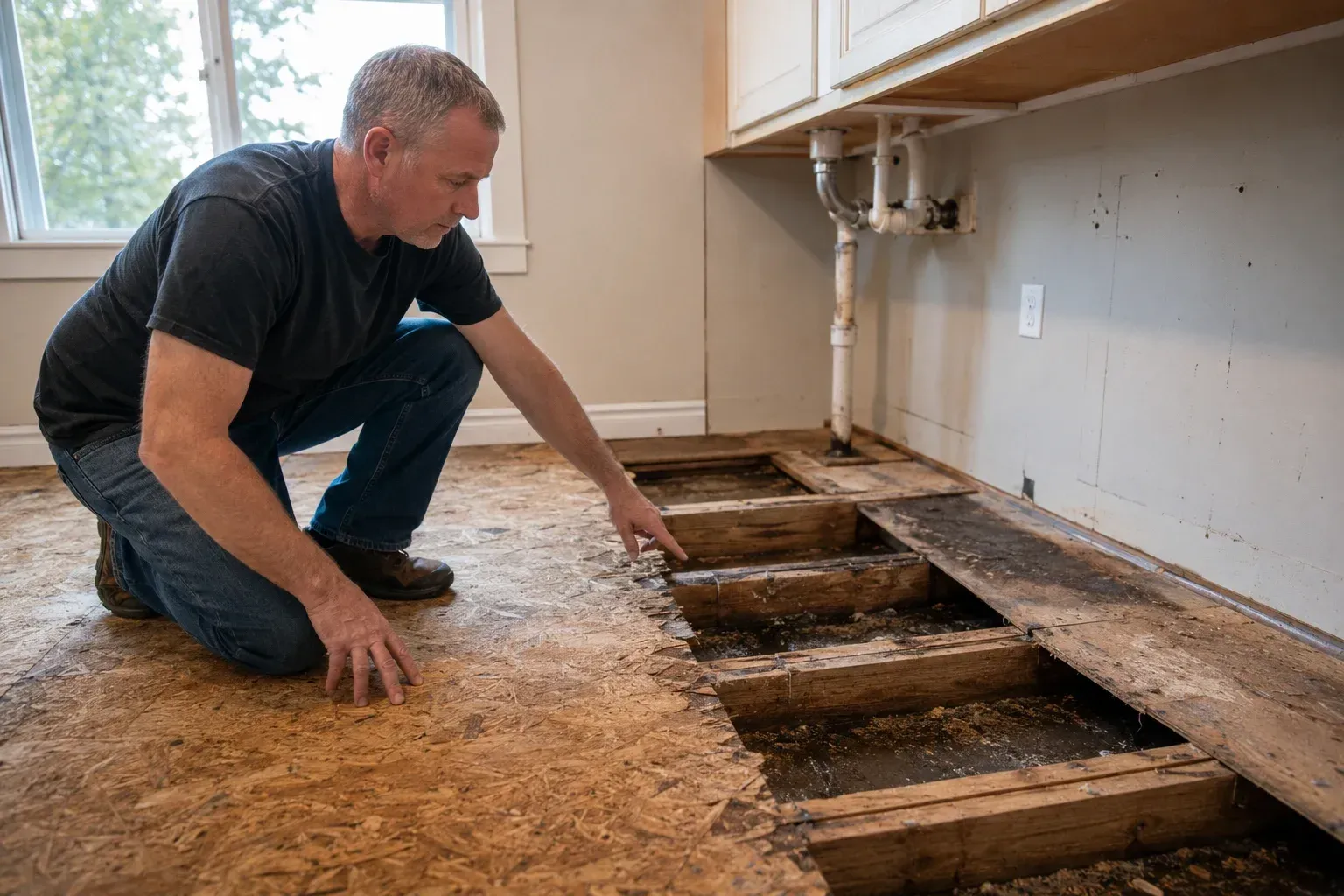
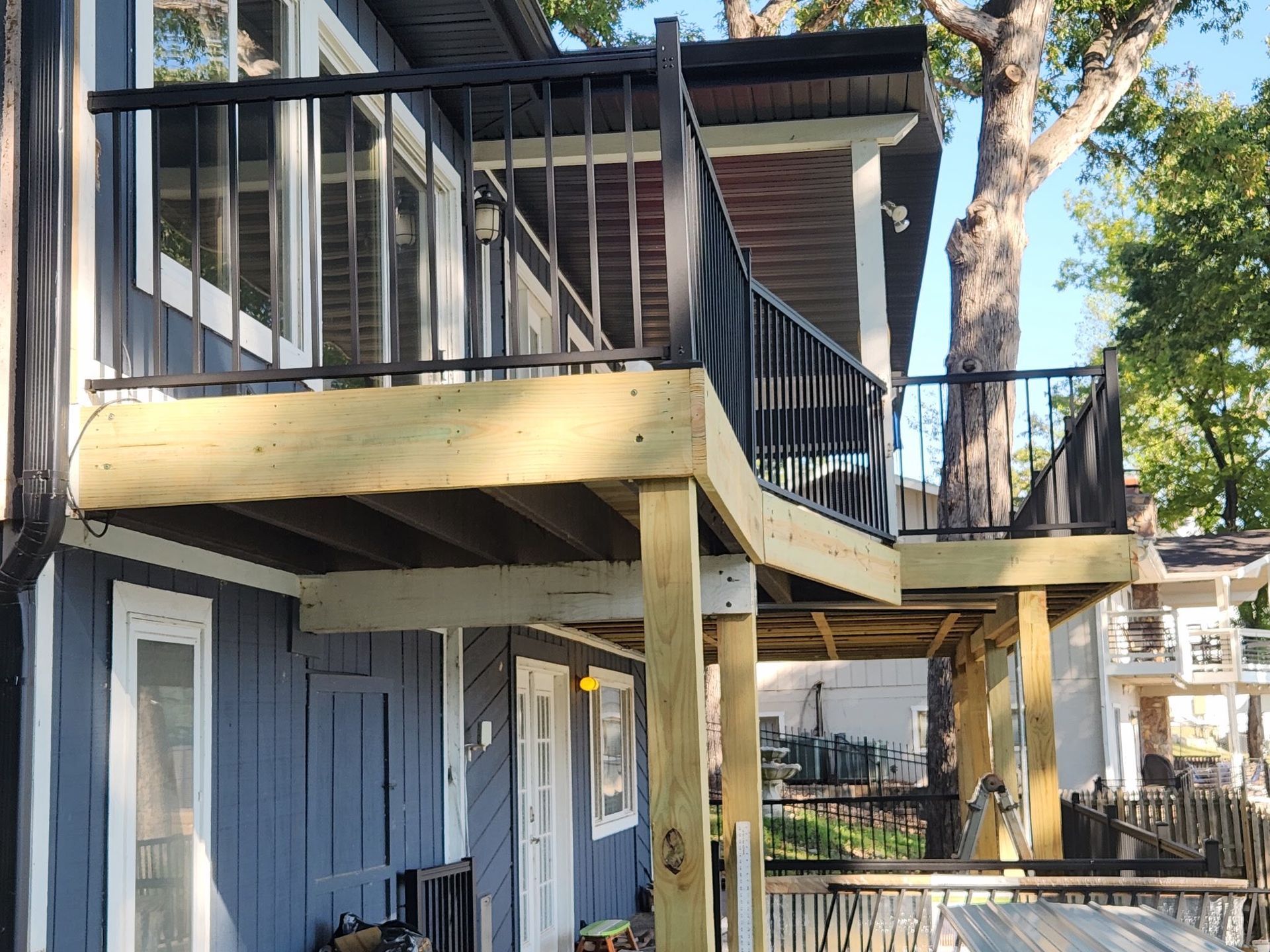
Almost every composite deck sits on a pressure-treated wood frame. The boards might be rated for 25 to 50 years, but the joists, beams, and ledger board are still wood, and wood is where most deck failures start.
A frame that stays wet, drains poorly, or was never flashed correctly at the house can fail decades before the composite surface shows real wear. This is common on older lake homes where a new composite surface was laid over an aging frame.
If you are putting composite boards on an existing frame, have the framing inspected first. Joist tape, proper flashing, and solid connections at the ledger are cheap compared to rebuilding a deck. This is also worth checking on Lake Ozark homes built close to the water, where framing sees more moisture than average.
Composite Deck Maintenance That Actually Matters
One reason people choose composite is that it needs far less work than wood. No staining, no sealing, no sanding. It is low maintenance, though, not zero maintenance. A short routine goes a long way.
Clean It Twice a Year
Wash the deck in spring and fall with soap, water, and a soft brush. This removes pollen, dirt, and the organic film that mildew grows on. Avoid pressure washing at close range or high PSI, since that can scar the cap on some boards.
Keep the Gaps Clear
Leaves and debris that pack into the gaps between boards trap moisture against the framing. Clearing the gaps each fall is one of the simplest ways to protect the structure. Around here, oak leaves and cottonwood fluff are the usual culprits.
Wipe Up Grease and Standing Debris
Capped boards resist stains, but grill grease and wet leaf piles left for months can still leave marks. Cleaning spills within a few days keeps the surface looking even.
Check the Hardware Once a Year
Walk the deck each spring. Look for loose railing posts, popped fasteners, and any movement at the stairs. Small fixes at this stage are quick handyman work. If you would rather have someone else handle it, seasonal inspections fall squarely under handyman services and take about an hour on most decks.
Signs Your Composite Deck Is Wearing Out
Composite decks rarely fail all at once. They give warnings, usually in this order:
- Heavy or uneven fading. Some fading is normal in year one. Chalky, blotchy color on older boards means the cap or surface is breaking down.
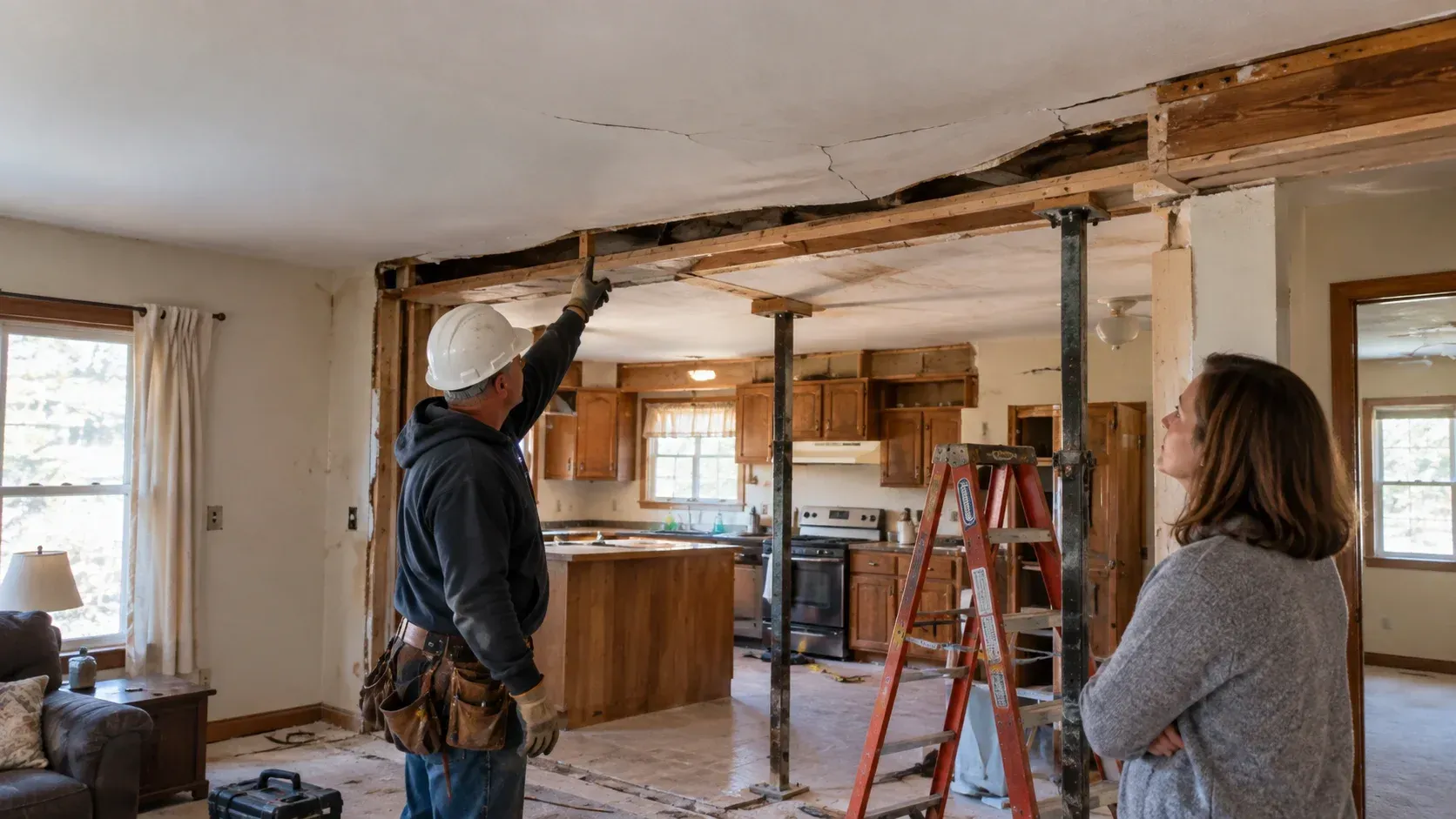
- Soft or spongy spots. The boards may be fine while the joists below are rotting. Soft spots underfoot call for a look at the framing right away.
- Loose or wobbly railings. Railings loosen as frames shift and fasteners age. This is a safety issue, not just a cosmetic one.
- Boards that cup, lift, or separate. Movement at the fasteners usually points to structural settling or installation issues.
- Persistent mildew that returns fast after cleaning. Often a drainage or airflow problem below the deck rather than a board problem.
Any one of these on a deck past 15 or 20 years old is a good reason to have the structure looked at.
Composite vs. Wood: A Quick Lifespan Comparison
For context, a pressure-treated wood deck in this climate usually lasts 10 to 15 years, and only with regular staining and sealing. Cedar can reach 15 to 20 years with steady upkeep. Composite reaching 25 to 30 years with basic cleaning is the main reason it costs more up front.
Wood is still a reasonable choice for some budgets and projects. The tradeoff is time and recurring cost: a wood deck needs refinishing every two to three years in Missouri weather, while composite mostly needs washing. Over a 25-year span, that difference adds up in both money and weekends.
Conclusion
In Lake Ozark's climate, a composite deck typically lasts 25 to 30 years, and quality capped boards on a sound frame can go beyond that. The material itself handles humidity, freeze-thaw cycles, and sun far better than wood. What usually decides a deck's real lifespan is the wood framing underneath, the quality of the original installation, and whether anyone cleans the surface and checks the hardware from year to year.
If you own a composite deck, a twice-yearly wash and an annual walkthrough cover most of the composite deck maintenance it needs. If you are planning a new one, put your attention on the frame, the flashing, and the drainage, since those are the parts you cannot easily upgrade later. Knowing what to expect from the material makes it easier to budget honestly and compare options without guesswork.
Thinking About a Deck That Can Handle Lake Weather?
If you are weighing a new composite deck, or you want an honest read on how much life is left in your current one, a short conversation can save you a lot of guessing. All In One Home & Condo Care builds and inspects decks across Camden, Miller, and Morgan Counties from our home base in Stover, and we are happy to walk you through options and answer questions with no pressure and no obligation.
Contact us or call (573) 216-0020 to talk it through.

Frequently Asked Questions
How long does a composite deck last compared to a wood deck?
Composite decks generally last 25 to 30 years, while pressure-treated wood decks in Missouri typically last 10 to 15 years with regular staining and sealing. The gap comes from composite's resistance to rot, insects, and moisture damage.
Does composite decking fade in full sun?
Yes, some fading is normal, especially in the first year. Capped composite boards fade slowly and evenly, and many carry 25 to 50 year fade warranties. Older uncapped boards and budget product lines fade faster.
Do composite decks get moldy near the lake?
Mildew can grow on the dirt and pollen that settle on any deck surface, including composite. Washing the deck once or twice a year usually keeps it in check. Mildew that keeps coming back often points to poor drainage or airflow under the deck.
Can I put composite boards on my existing deck frame?
Sometimes, but the frame needs to be inspected first. Composite boards are heavier than wood and can outlast an old frame by decades, so joists, beams, and the ledger connection should be sound before new boards go down.
How much maintenance does a composite deck need each year?
Plan on washing it with soap and water twice a year, clearing debris from the board gaps each fall, and checking railings and fasteners every spring. There is no staining or sealing involved.
What shortens a composite deck's lifespan the most?
Poor installation and a failing wood frame are the two biggest factors. Trapped moisture under the deck, packed debris in the board gaps, and neglected flashing at the house all speed up problems that have little to do with the boards themselves.
Is composite decking worth the higher upfront cost?
It depends on how long you plan to keep the home and how you value your time. Composite costs more to install but avoids the refinishing that wood needs every few years. Over 20 or more years, the total cost of ownership often narrows considerably.