Introduction
Does a soft kitchen floor mean the subfloor is damaged? A soft or spongy kitchen floor usually means the subfloor underneath has been damaged, most often by moisture, and installing new flooring or planning a kitchen remodel without repairing that subfloor rarely solves the problem. The give you feel underfoot comes from wood that has weakened below the surface, so the fix normally involves the layer you cannot see.
This matters because the flooring you walk on and the subfloor beneath it are two different things. The surface, whether tile, vinyl, laminate, or wood, is only as solid as the wood platform it rests on. When that platform softens, the best flooring in the world will still feel spongy, because the problem sits underneath it. Many homeowners start by pricing out new flooring or a kitchen remodel when the real issue is the structure below.
The practical decision, then, is not simply "what new floor should I buy." It is figuring out whether you are dealing with a surface that has worn out or a subfloor that has failed. Those two problems call for very different work, and getting the diagnosis right first is what keeps you from paying twice.
What the Subfloor Is and Why It Matters
The subfloor is the structural layer of wood, usually plywood or oriented strand board, that sits on the floor joists and supports your finished flooring. It carries the weight of the room and gives the surface flooring something solid to attach to.
A typical kitchen floor is built in layers. At the bottom are the joists, the framing beams that span the room. On top of those sits the subfloor panel. Above that there may be an underlayment, and then the finished flooring you see.
When the subfloor stays dry and intact, the whole assembly feels firm. When it gets wet and starts to break down, the panel loses its stiffness, delaminates, or rots. That is when you feel the sponginess, hear a creak, or notice the floor flexing near an appliance. Because the subfloor is structural, damage there is a different category of problem than a scratched or dated surface. Repairs to framing and structural wood fall under framing and structural work rather than a simple flooring swap.
Signs the Problem Is the Subfloor, Not the Flooring
The clearest signs of subfloor damage are a soft or bouncy feel underfoot, sagging or dipping areas, floors that flex near sinks and appliances, and musty odors, rather than problems limited to the surface appearance.
Surface flooring issues and subfloor issues feel different. Use these signs to tell them apart:
- Sponginess or give. If the floor flexes or feels soft when you step on it, the support below is likely compromised. Worn flooring alone stays firm.
- Sagging or low spots. A visible dip usually means the subfloor, and sometimes the joists, have weakened.
- Movement near water sources. Softness concentrated around the sink, dishwasher, or refrigerator points to a moisture problem in the subfloor.
- Musty or moldy smell. A damp, earthy odor suggests trapped moisture and possible rot beneath the surface.
- Loose or lifting tiles, or peaking laminate. When the surface will not stay put, the layer it bonds to may be failing.
- Creaking that is new or spreading. Fresh, widening creaks can signal a subfloor pulling loose from the joists.
By contrast, if the floor is solid underfoot and the only issues are scratches, fading, dated color, or worn finish, you are more likely dealing with a surface that simply needs replacing.
Common Causes of Soft Kitchen Floors
The most common cause of a soft kitchen floor is long-term moisture from slow plumbing leaks, appliance leaks, or spills that seep into the subfloor, though age and poor original installation can contribute.
Kitchens are full of water sources, which is why they are one of the most common rooms for subfloor trouble. The usual culprits include:
- Under-sink leaks. A slow drip from a supply line, drain, or garbage disposal can soak the subfloor for months before anyone notices.
- Dishwasher leaks. Failing door seals or supply connections leak water directly onto the floor beneath the unit.
- Refrigerator water lines. Ice maker and water dispenser lines can develop pinhole leaks that drip behind the fridge, out of sight. Homes near the water, common across the Lake of the Ozarks area, can see this more often given the humidity.
- Repeated spills and mopping. Standing water at seams and edges, especially with damaged flooring, works its way down over time.
- Age and wear. Older subfloor panels and adhesives can break down, particularly if they were exposed to moisture in the past.
The common thread is time. Most soft floors are the result of a small problem that went unaddressed, not a sudden event. That is why the source of the moisture usually needs fixing along with the wood itself, or the damage simply returns. Ongoing small repairs like a leaking supply line often fall under general handyman services.
How to Check a Soft Spot Yourself
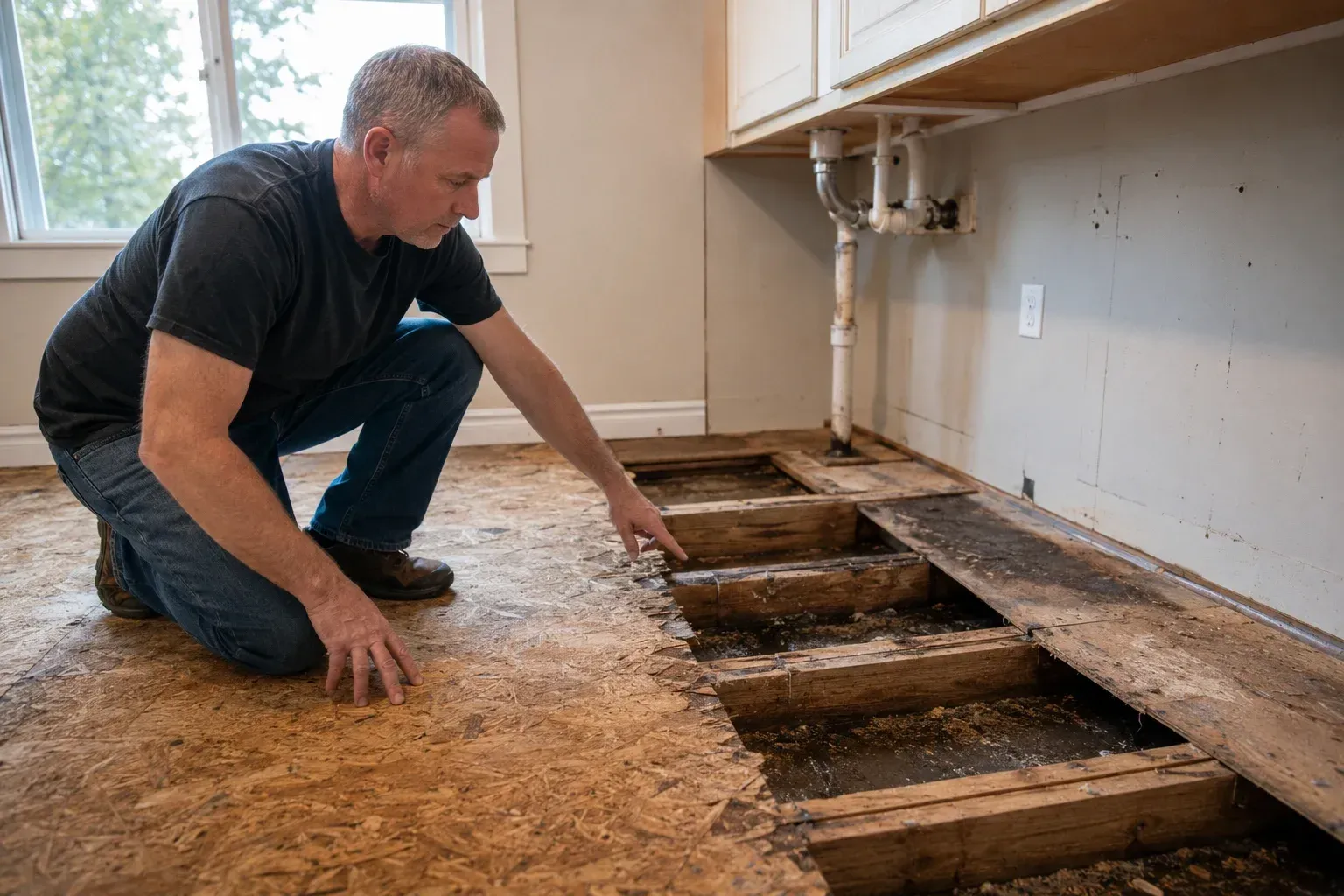
You can assess a soft floor by walking it to map the soft areas, pressing for give, checking for moisture and odor, and inspecting under sinks and appliances, but confirming the full extent usually requires lifting a section of flooring.
A basic homeowner check goes like this:
- Walk the floor slowly. Note every spot that feels soft, bouncy, or lower than the rest. Mark them if it helps.
- Press and feel for give. Apply firm pressure with your foot or hand. Real subfloor damage flexes; solid flooring does not.
- Look for water clues. Check under the sink and behind or beneath appliances for stains, warping, dampness, or corrosion on fittings.
- Use your nose. A musty smell in cabinets or near the floor suggests hidden moisture.
- Check the surface condition. Lifting tiles, peaking laminate, or stained, cupped wood near the soft area all support a subfloor diagnosis.
This tells you whether you likely have a subfloor problem and roughly where it is. What it cannot tell you is how far the damage extends or whether the joists are involved, because that is hidden below. Determining the true scope typically means removing a section of flooring, which is the point where many homeowners bring in a professional.
Conclusion
A soft kitchen floor is usually a message from the subfloor, not just the surface you walk on. Because the finished flooring rests on that structural layer, installing new flooring over a soft subfloor tends to hide the problem rather than solve it, while the underlying damage keeps spreading. The most common cause is long-term moisture from a slow leak, which is why fixing the water source is as important as repairing the wood.
Telling repair from replacement comes down to how much of the subfloor is affected and whether the joists below are involved. A homeowner can map the soft areas and check for moisture, but confirming the full extent usually means opening the floor. Approaching a soft floor as a structural question first, and a flooring question second, is what leads to a repair that lasts instead of one that has to be redone.
Not Sure If Your Soft Kitchen Floor Needs Subfloor Repair Near Stover, MO?
If your kitchen floor feels soft or spongy and you are not sure whether it needs subfloor repair or just new flooring, it helps to have someone look before you commit to either. All In One Home & Condo Care handles subfloor and flooring work across Camden, Miller, and Morgan Counties and can walk you through what your floor likely needs, with no pressure and no obligation. Get in touch with our team or call (573) 216-0020 to talk it through.