What Should You Look for During a Roof Inspection in Camdenton, Missouri?

Share this article

Why Choosing the Right Roofing Contractor Matters

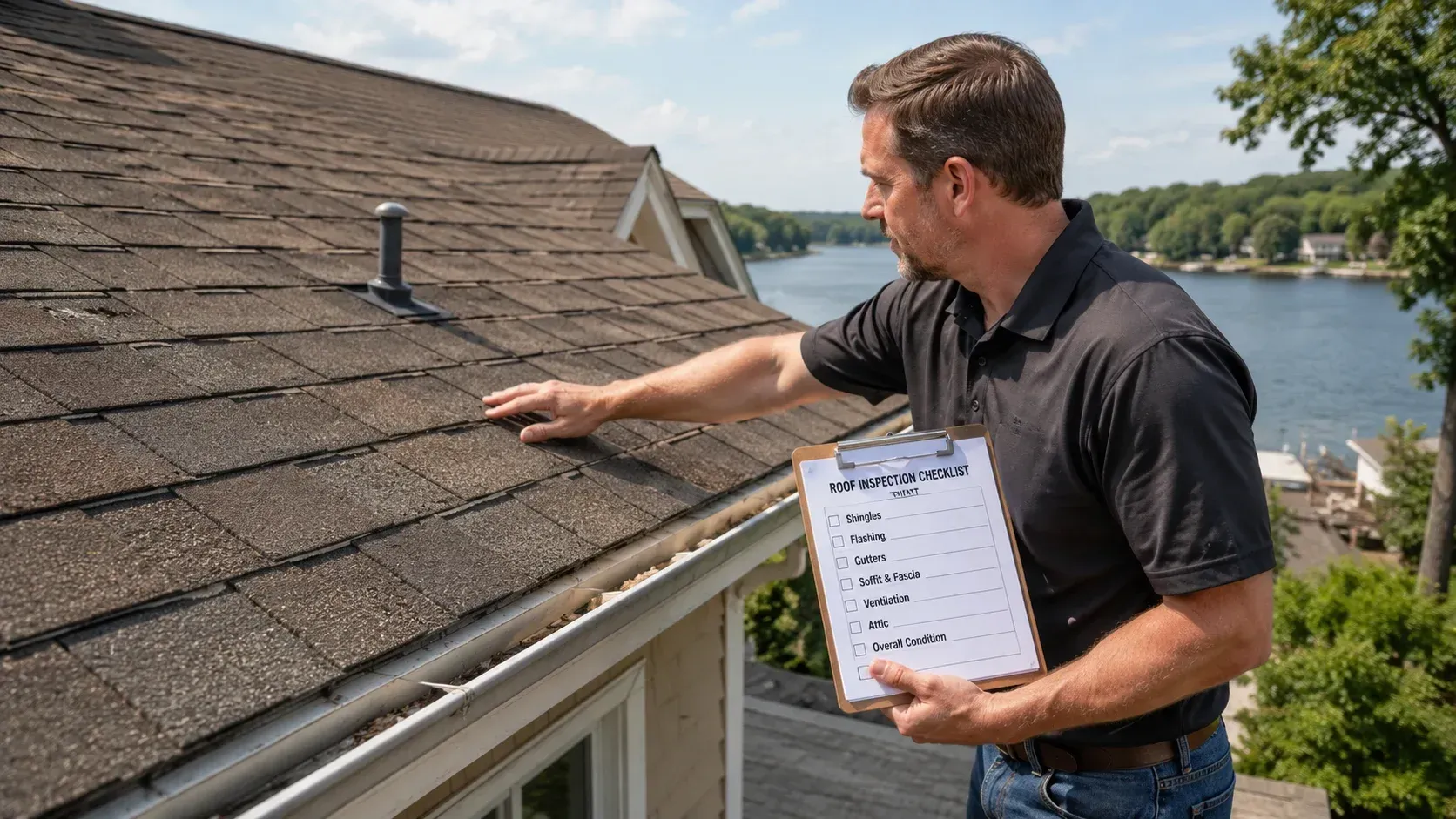
An inspector holding a checklist on a lakeside home, demonstrating what should you look for during a roof inspection.

Key Takeaways

  • A roof inspection should cover the shingles, flashing, gutters, roof edges, and the attic underneath, not just what you can see from the driveway.
  • Missing or curling shingles, rusted flashing, sagging areas, and ceiling stains are the most common signs of roof damage in mid-Missouri.
  • Camdenton's hail, wind, heavy summer storms, and freeze-thaw winters make twice-yearly inspections a reasonable habit.
  • Much of an inspection can be done from the ground with binoculars, but walking on a roof carries real fall risk and is often better left to a professional.
  • Small findings like a lifted shingle or a worn pipe boot cost little to fix now and much more once water gets into the decking.


Table of Contents

  1. The Short Answer: Six Areas Every Inspection Should Cover
  2. Why Roof Inspections Matter in Camdenton's Climate
  3. A Roof Inspection Checklist You Can Follow
  4. Signs of Roof Damage After a Storm
  5. What You Can Check Yourself vs. When to Call a Professional
  6. How Often Should a Roof Be Inspected?
  7. Conclusion
  8. Not Sure What Shape Your Roof Is In?
  9. Frequently Asked Questions


Introduction

During a roof inspection in Camdenton, you should look at six main areas: the shingles, the flashing around chimneys and vents, the gutters and downspouts, the roof edges and fascia, the attic underneath, and any signs of sagging or water staining. Problems in any one of these spots can let water into the home, and most of them start small enough to miss from the street.


That matters in Camden County more than in gentler climates. Roofs here take hail, straight-line winds off the lake, hot summers, and winters that freeze and thaw over and over. Catching a lifted shingle or a cracked pipe boot early is a cheap fix. Catching it two years later usually means wet decking, stained ceilings, and a much bigger roofing repair.


This guide walks through a practical roof inspection checklist, the warning signs worth acting on, and where the line sits between what a homeowner can safely check and what calls for a professional. It is based on what we find on roofs across Camden, Miller, and Morgan Counties every season.


The Short Answer: Six Areas Every Inspection Should Cover

A thorough roof inspection is really six smaller inspections. Skipping any one of them leaves a blind spot.

  1. Shingles or roof covering - the surface layer that sheds water
  2. Flashing - the metal at chimneys, vents, valleys, and walls
  3. Gutters and downspouts - where the water is supposed to go
  4. Roof edges, fascia, and soffits - where rot usually shows first
  5. The attic - the underside of the roof, where leaks reveal themselves
  6. The roofline itself - checked from a distance for sagging or waves

The sections below break down what to look for in each.


Why Roof Inspections Matter in Camdenton's Climate

Mid-Missouri is hard on asphalt shingles. Camdenton sits in a part of the state that sees hail most years, and spring storms coming across the Lake of the Ozarks bring wind gusts strong enough to lift shingle tabs and peel back edges.


Summer heat bakes the asphalt and dries out the granule coating. Then winter arrives with freeze-thaw cycles, where melted snow refreezes at the eaves and works under the shingles as ice dams. Each season stresses the roof a different way.


None of this means a Camdenton roof is doomed to fail early. It means the roof accumulates small wear faster than the same roof would in a milder climate, and small wear is exactly what an inspection is designed to catch.


A Roof Inspection Checklist You Can Follow

Work through this list in order. Most of it can be done from the ground or a ladder at the eave, plus a trip into the attic.


Shingles

Look for shingles that are missing, cracked, curling at the edges, or cupping in the middle. Check for bald patches where the granules have worn off, and look in the gutters for granule buildup, which looks like coarse black sand. Granule loss exposes the asphalt underneath to UV light and speeds up aging.


Flashing

Flashing is the thin metal that seals the joints where the roof meets a chimney, wall, vent, or valley. Look for rust, lifted edges, cracked sealant, and gaps. Flashing failures cause a large share of roof leaks, often on roofs where the shingles themselves are fine.


Pipe Boots and Vents

The rubber boots around plumbing vent pipes crack and split with sun exposure, often years before the shingles wear out. This is one of the most common leak sources we find, and one of the cheapest to fix.


Gutters, Downspouts, and Drainage

Clogged or sagging gutters push water back under the shingle edge and against the fascia. Check that gutters are attached firmly, slope toward the downspouts, and are clear of leaves. In wooded parts of Camden County, this alone is a twice-a-year job.


Fascia, Soffits, and Roof Edges

Walk the perimeter of the house and look up at the boards behind the gutters and under the overhangs. Peeling paint, dark streaks, and soft or crumbling wood point to water getting where it should not. Rot here often traces back to a gutter or drip edge problem above it.


The Attic

Go up on a bright day and look for pinpoints of daylight through the roof deck. Then look for water stains, dark streaks on the rafters, damp or matted insulation, and any musty smell. After a hard rain is the best time to check. Many leaks show up in the attic long before they stain a ceiling.


The Roofline

From across the street, sight along the ridge and the roof planes. A straight ridge and flat planes are what you want. Dips, waves, or sagging can point to decking or structural issues that need a closer look at the framing underneath.

An inspector assessing a shingled roof with a clipboard, featuring text explaining what should you look for during a roof inspection.

Signs of Roof Damage After a Storm

Storm damage does not always look dramatic from the ground. After hail or high winds, add these checks to the list above.


After hail: look for dents in gutters, downspouts, and metal vents, and dark round bruises on the shingles where granules were knocked loose. Soft spots that feel like a bruised apple mean the shingle mat is fractured. Dents in soft metals are often the easiest evidence to spot from a ladder.


After high winds: look for shingle tabs flipped back or creased, shingles in the yard, and lifted ridge caps. A creased shingle may lie flat again afterward but has lost its seal, which makes it easy for the next storm to remove entirely.


After either: check the attic within a day or two, and again after the next rain. If you plan to file an insurance claim, take dated photos before anything is repaired, and get the damage documented while it is fresh.


What You Can Check Yourself vs. When to Call a Professional

Most of the checklist above is safe from the ground, a stepladder at the eave, or inside the attic. Binoculars or a zoomed-in phone photo will show shingle condition well enough for a first pass.


Walking on the roof is a different matter. Falls from residential roofs cause serious injuries every year, and wet, mossy, or steep surfaces make it worse. Walking a roof can also break brittle shingles, especially in cold weather. There is no shame in stopping at the ladder.


Call a professional when you find sagging, widespread granule loss, suspected hail damage, active leaks, or anything you cannot see well enough to judge. Small isolated fixes, like resealing a pipe boot or reattaching a gutter, are typical handyman work. Larger patterns of wear call for a roofing evaluation to determine whether repair or replacement makes more sense.


How Often Should a Roof Be Inspected?

Twice a year is a sound rhythm for this region: once in spring, after winter has done its worst, and once in fall, before the freeze sets in. Add an extra check after any storm with hail or damaging winds.


Roof age changes the math. A roof under 10 years old mostly needs the storm checks. Asphalt roofs in the 15 to 25 year range deserve closer attention each time, since that is when granule loss, brittle shingles, and flashing failures start to cluster.


If you are buying or selling a home in the Camdenton area, an inspection is worth doing regardless of the season. Roof condition is one of the first things buyers and insurers ask about.


Conclusion

A useful roof inspection covers the shingles, flashing, pipe boots, gutters, roof edges, attic, and the overall roofline. In Camdenton, where hail, wind, heat, and freeze-thaw cycles all take their turn, checking these areas each spring and fall, plus after major storms, gives homeowners the best chance of catching problems while they are still small.


Most of the checklist is safe to do from the ground and the attic. The judgment calls, like whether hail bruising warrants a claim or whether a sag points to structural trouble, are where a professional's eyes earn their keep. Either way, knowing what to look for puts you in a better position to make decisions about your own roof instead of guessing.


Not Sure What Shape Your Roof Is In?

If something on this checklist caught your eye, or your roof simply has not been looked at in a few years, a professional inspection can give you a clear picture of where things stand. All In One Home & Condo Care inspects and repairs roofs throughout Camden, Miller, and Morgan Counties, including Camdenton homes, and we are glad to walk you through what we find with no pressure to act on any of it. Contact us or call (573) 216-0020 with your questions.

Frequently Asked Questions

  • How often should I have a roof inspection in Camdenton, MO?

    Twice a year is a reasonable schedule: once in spring and once in fall, plus a check after any hailstorm or high-wind event. Older roofs, generally 15 years and up, benefit from closer attention at each inspection.


  • What are the most common signs of roof damage?

    Missing, cracked, or curling shingles, granules collecting in the gutters, rusted or lifted flashing, cracked rubber pipe boots, water stains on ceilings or attic rafters, and any sagging along the roofline.


  • Can I inspect my roof myself?

    You can cover most of a roof inspection checklist from the ground with binoculars, from a ladder at the gutter line, and from inside the attic. Walking on the roof carries fall risk and can damage brittle shingles, so that part is usually better left to a professional.


  • How do I know if hail damaged my roof?

    Look for dents in gutters, downspouts, and metal roof vents, and dark bruise-like spots on shingles where granules were knocked away. Hail damage is often subtle from the ground, so a closer inspection is worthwhile after any significant hailstorm.


  • Does a small leak really need attention right away?

    Small leaks tend to grow, and the water damages decking, insulation, and drywall long before it becomes visible inside. Addressing a minor leak early usually costs far less than repairing the wood and interior finishes it can ruin over time.


  • What does a professional roof inspection include?

    A professional inspection typically covers the shingle surface, flashing, vents and pipe boots, gutters, fascia and soffits, and the attic, along with photos and a written summary of any findings. Some inspections also include a moisture check of suspect areas.


  • How long does a roof inspection take?

    Most residential inspections take 45 minutes to a couple of hours, depending on the size of the home, the roof pitch, and whether the attic is easy to access. Storm-damage documentation for insurance can take longer.


Recent Posts

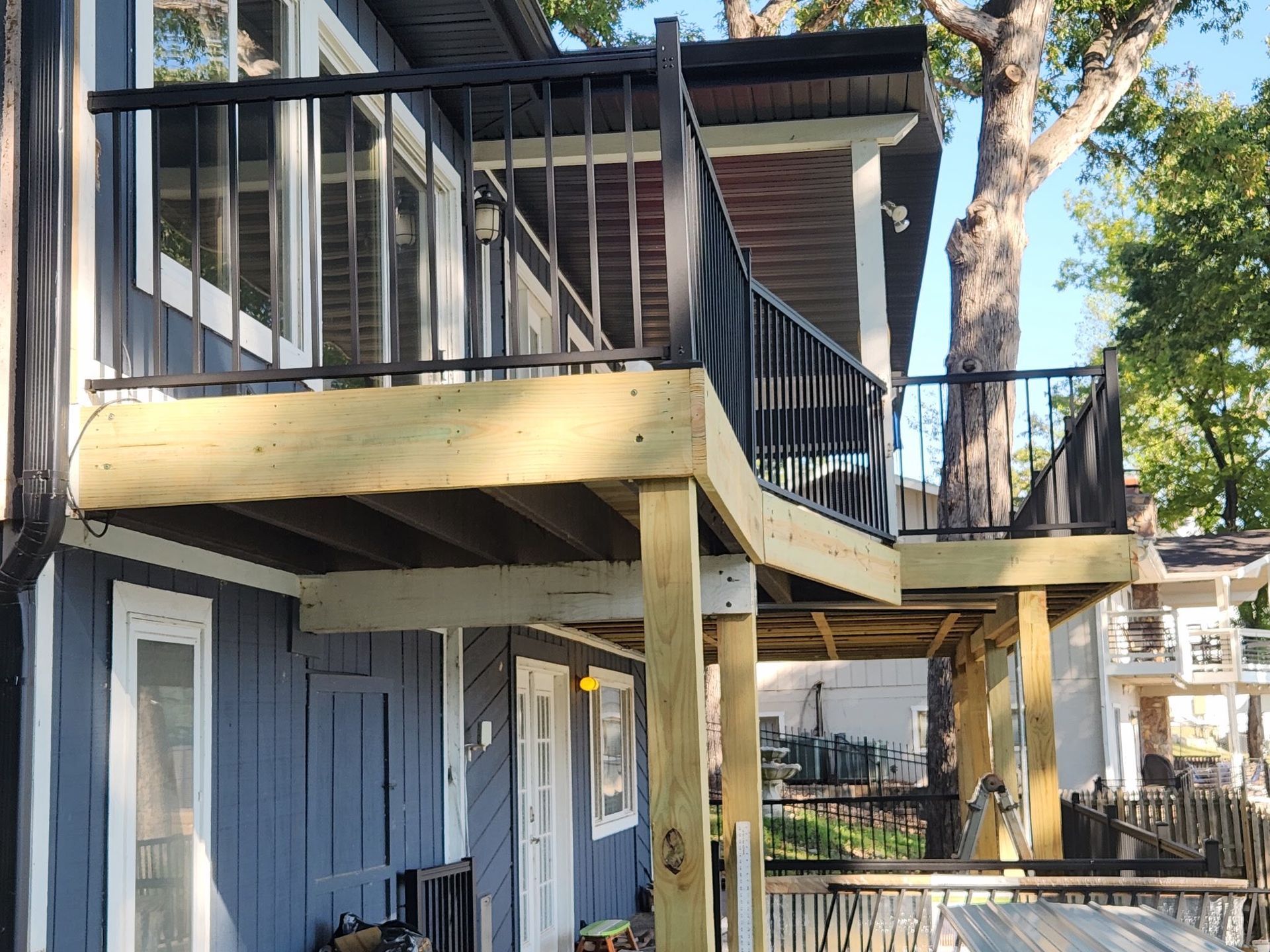
A lakeside deck showing how long does a composite deck last in humid Lake of the Ozarks weather.
July 15, 2026
Learn how long a composite deck lasts in Lake Ozark, Missouri, how humidity, sun, and lake weather affect its lifespan, and simple ways to help it age well.
Worker installing shingles on a rooftop, wearing a yellow hard hat and orange safety vest
June 30, 2026
Common roof problems include leaks, missing shingles, and storm damage. Learn what Missouri homeowners should watch for and how to prevent issues. Learn more!
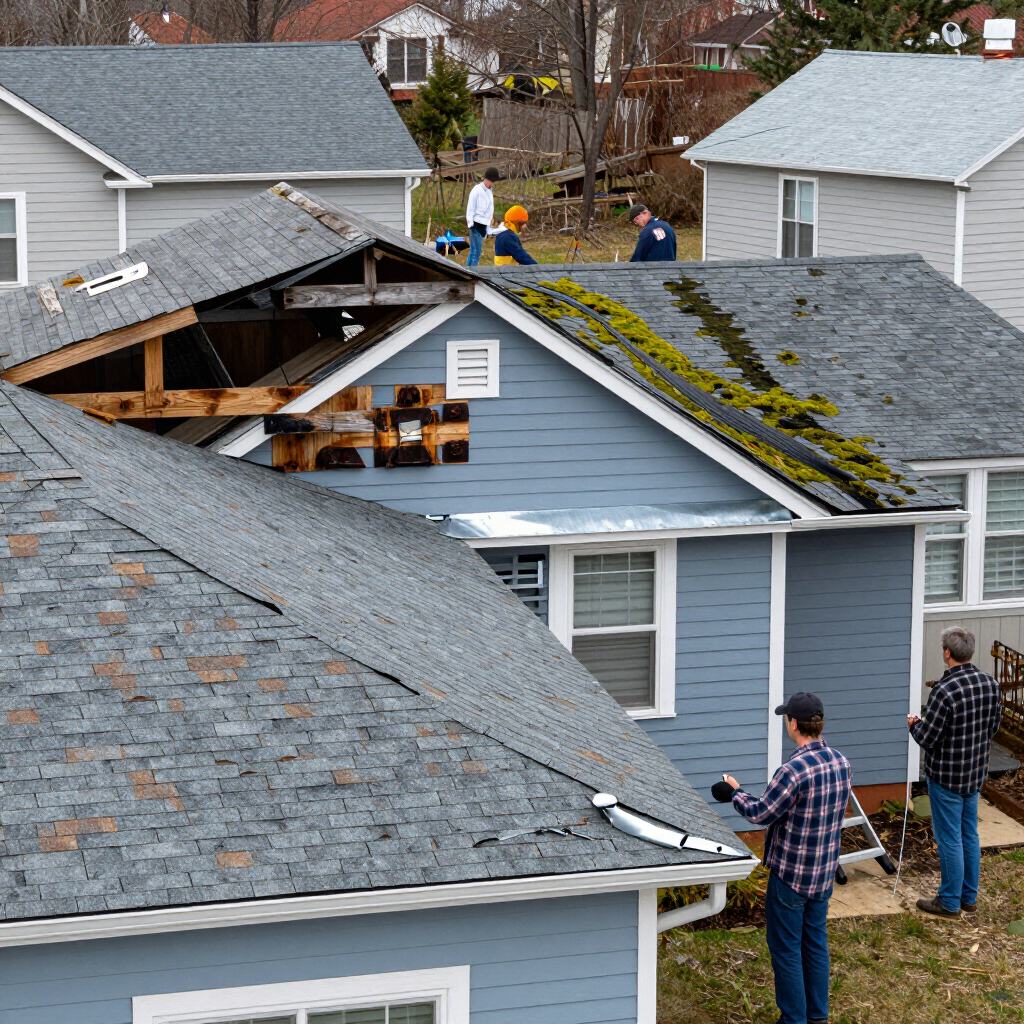
Workers inspecting storm-damaged rooftops on a residential house with exposed rafters and missing shingles
June 30, 2026
Common roof problems include leaks, missing shingles, and storm damage. Learn what Missouri homeowners should watch for and how to prevent issues. Learn more!
June 5, 2026
Seasonal home maintenance helps prevent damage and costly repairs. Learn key tasks for each season to keep your home safe, efficient, and well maintained.
Empty room with wood-pattern floor, white walls, window, ceiling light, and a step ladder in the center
June 5, 2026
Condo maintenance includes repairs, cleaning, and system checks. Learn what services are covered and how regular upkeep protects your property value.
Outdoor condo patio with red headline about cold weather furniture care and an All in One logo
May 13, 2026
Pouring concrete in cold weather affects curing and strength. Learn the risks, proper methods, and how to protect concrete during low temperatures. Learn more!
Architectural plans on a table in a home interior
May 13, 2026
Insulated concrete home plans offer durability and energy efficiency. Learn how to choose the right design, layout, and features for your home project.